Salim is out!
My fourth book, Salim, is finally out! It’s been quite the journey to get here and I wanted to explain the purpose and process of it in depth.
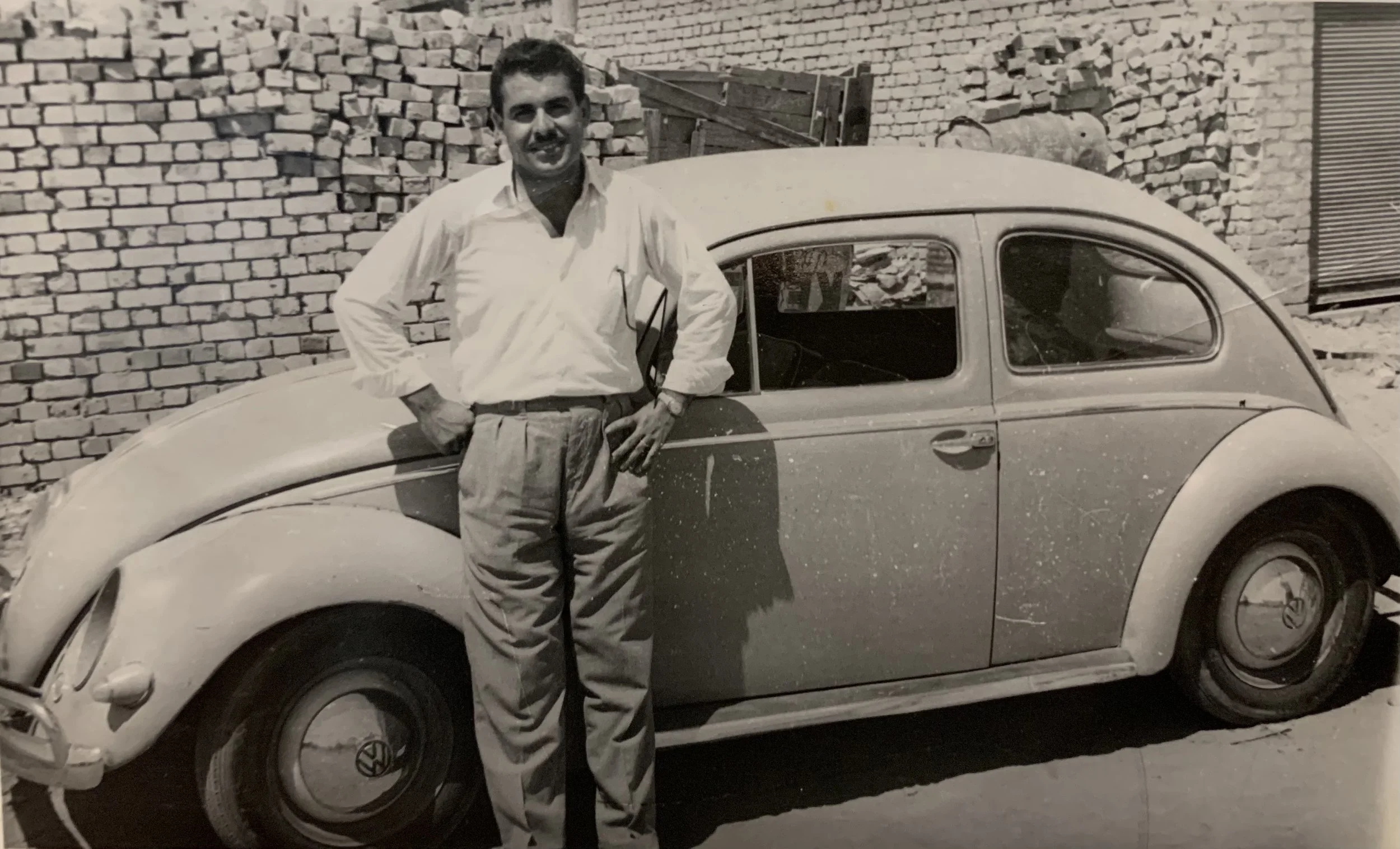
I started writing the book a few years ago to understand someone I never fully knew, my grandfather, whom the book is named after.
He passed away when I was 21 and going to school in Miami. I wasn’t able to go his funeral which consumed me with guilt and it wasn't until then that I realized how many questions I had never asked him. What was it like to leave Baghdad? What did he carry with him, literally and emotionally? What did he hope for when he arrived in America, and did that hope survive?
The book became my way of filling in those silences. I couldn't ask him directly, so I imagined. I researched. I wrote. Poem by poem, I built a portrait of a man I loved but never truly understood, and in doing so, I started to feel some closure.
Most of Salim was written in West Hollywood, on streets that felt both familiar and foreign. I was trying to honor my family's history while also wrestling with the version of America I inherited, one that often feels like has withered.
Writing the book was an act of trying to stay grounded when the ground kept shifting.
The poems move between worlds: Baghdad and Los Angeles, my grandfather's era and my own, the promise of the American dream and its slow unraveling. Cars appear throughout the collection as symbols of moving from one era to the next, one dream to another, fueled by hope. But in one poem, "Drive," I describe setting a car on fire, a refusal to keep running from the very problems I carry with me (hence, the cover.)
The book parallels the American dream of the 1970s, when my family immigrated, with its decaying state today. But it also asks a deeper question: how do we navigate a world that feels like it's constantly unraveling while preserving our inner peace?
I think a lot of people feel caught between generations, between countries, between the promise they were given and the reality they're living. Salim is an attempt to sit in that tension without giving up on hope.
It doesn't look away from the wreckage, but it also refuses to let despair have the final word.
Salim is for anyone who has ever felt torn between two worlds. For the children of immigrants, for Chaldean readers who rarely see their stories reflected in literature, and for anyone who needs a reminder that hope is still possible, even when the world feels like it's crumbling.
Now available on Amazon.